If you’ve been invited to a Sikh wedding in Auckland and you’re not sure what to expect — what to wear, where to sit, what the ceremony actually involves — this guide is for you. The Anand Karaj is one of the most meaningful ceremonies you’ll ever attend. And whether you’re a guest, a family member from out of town, or a couple doing early research, here’s a real, honest picture of what happens and why it matters.
What Does Anand Karaj Mean?
Anand Karaj translates to “blissful union” in Punjabi. It’s the Sikh wedding ceremony, conducted in the presence of the Guru Granth Sahib Ji (the holy scripture), and it centres around four rounds — called Laavan — that the couple walk together around the scripture as each verse is recited and sung.
Unlike many wedding ceremonies, the Anand Karaj isn’t primarily about the couple making promises to each other. It’s about both individuals turning toward something greater — God, community, and a shared spiritual path. That shift in perspective makes the ceremony feel profound even if you don’t understand the language.
Where Does It Take Place in Auckland?
Most Anand Karaj ceremonies in Auckland take place at a Gurdwara (Sikh temple). The main Gurdwaras used for weddings in Auckland include:
- Sri Kalgidhar Sahib Gurdwara in Takanini — the most commonly used for large wedding ceremonies
- Gurdwara Singh Sabha in Papatoetoe
- Some families also hold ceremonies at private venues with a portable Palki Sahib setup, though this requires prior approval from religious authorities
What to Expect as a Guest
Cover your head. This is non-negotiable. Everyone — regardless of gender or religion — must cover their head before entering the Darbar Sahib (main hall). Most Gurdwaras have scarves or bandanas at the entrance, but bringing your own shows respect.
Remove your shoes. You’ll leave your shoes at the entrance. There’s usually a shoe storage area near the door.
Arrive on time — or early. The ceremony often begins with Kirtan (devotional music) before the main proceedings. Arriving early lets you absorb the atmosphere.
Sit on the floor. The congregation sits on the floor of the Darbar Sahib, with men and women traditionally on opposite sides (this varies by family). The Guru Granth Sahib Ji is placed at the front, elevated, and everyone bows before it upon entering.
The Laavan. This is the heart of the ceremony. As each of the four verses is recited by the Granthi and sung by the Ragis (musicians), the couple walks clockwise around the Guru Granth Sahib Ji. Each round represents a stage of the spiritual journey — from detachment from worldly things, to divine knowledge, to surrender, to union. By the fourth Lav, the couple is married.
Ardas and Hukamnama. After the Laavan, the congregation stands for the Ardas — a collective prayer. The Hukamnama (a random reading from the Guru Granth Sahib Ji) is then taken as guidance for the couple’s new life together.
Karah Prasad. The ceremony closes with the distribution of Karah Prasad — a warm, sweet semolina offering given to everyone present as a blessing. Accept it with both hands cupped together.
How Long Does an Anand Karaj Take?
The ceremony itself typically runs 1.5 to 2 hours, though with Kirtan beforehand the full Gurdwara portion of the day can run 3 to 4 hours. Families often follow this with a reception at a separate venue in the afternoon or evening.
What to Wear to a Sikh Wedding
For guests: Modest, respectful clothing in bright colours. Avoid black and white, which are traditionally associated with mourning in many South Asian cultures. Salwar kameez, kurta pyjama, or smart Western formals all work well.
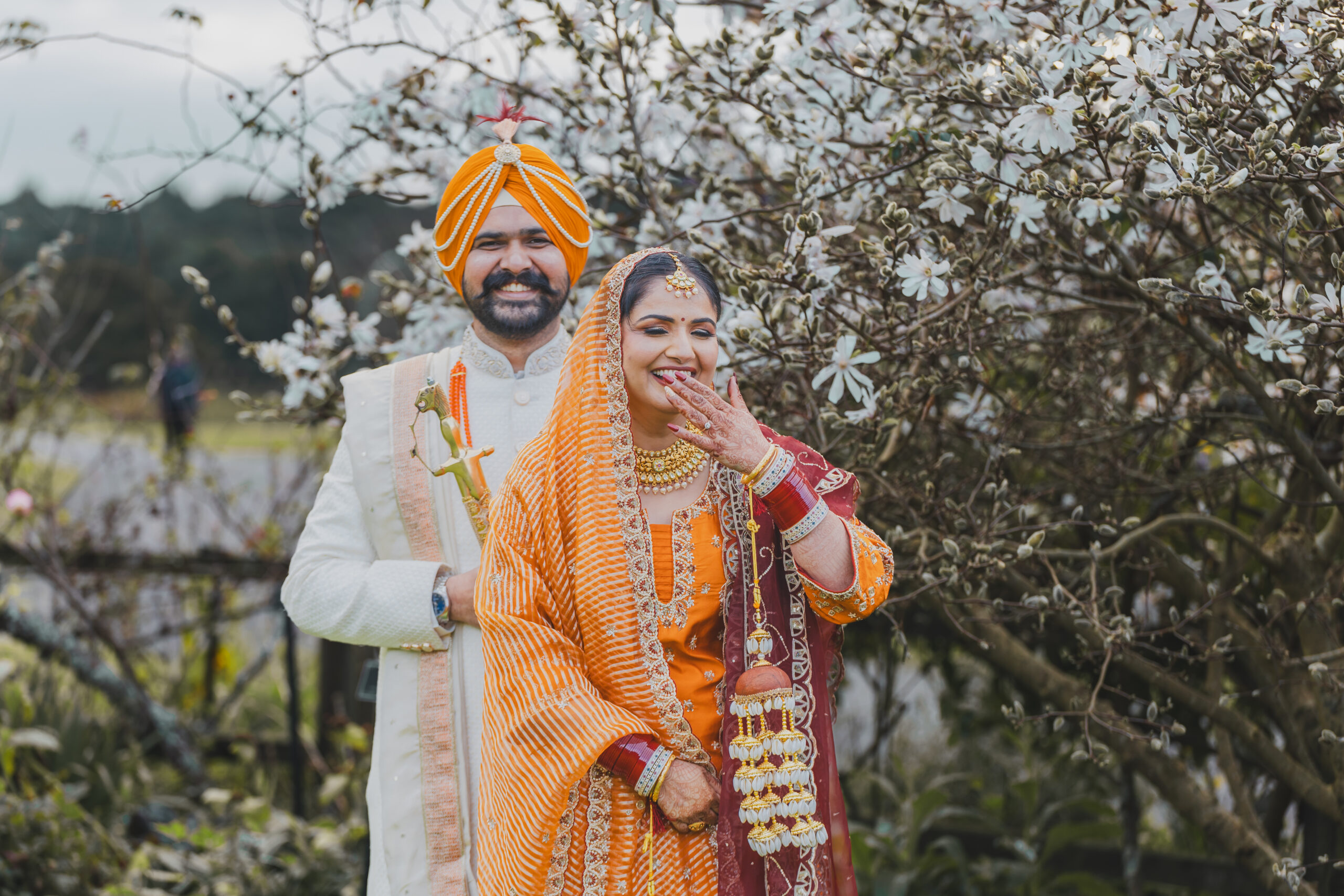
For the couple: The bride typically wears a red, pink, or deep-coloured salwar suit or lehenga with full dupatta. The groom traditionally wears a sherwani or kurta pyjama, often with a turban (dastar) in a colour that complements the bride’s outfit.
A Note on Photography During the Ceremony
The Anand Karaj requires a photographer who understands the flow of the ceremony deeply. The Laavan move quickly — four rounds, each with its own emotional beat. If your photographer isn’t positioned correctly before the first Lav begins, they’ll miss it. There’s no “can we do that again.”
As guests, it’s worth knowing that photography protocols vary by Gurdwara. Some allow photography freely; others restrict flash or specific positioning during Ardas. If you’re planning to take photos as a guest, follow the lead of the family and the professional photographer on the day.
Frequently Asked Questions
Can non-Sikhs attend an Anand Karaj?
Yes. Non-Sikhs are welcome to attend — the requirement is respectful conduct, a covered head, and no shoes inside the Gurdwara. Many Anand Karaj ceremonies in Auckland have guests from all backgrounds and religions.
Do I need to bring anything?
A head covering is the main thing — most Gurdwaras provide these but bringing your own (a scarf, dupatta, or bandana) shows thoughtfulness. Some guests also bring a small gift or envelope for the couple, though this is not compulsory.
Is photography allowed during the ceremony?
This varies by Gurdwara. The wedding’s professional photographer will have confirmed the protocols with the venue in advance. As a guest, it’s best to check with the family before taking photos, especially during the Laavan and Ardas.
What happens after the ceremony?
Most Sikh weddings in Auckland are followed by a separate reception at another venue — usually a celebration with food, speeches, dancing, and the full energy of a South Asian reception. Details will be on your invitation.
How long should I expect to be there?
Plan for 3–4 hours at the Gurdwara (including Kirtan before the ceremony) plus travel time to the reception. It’s a full day — embrace it.
Planning a Sikh Wedding in Auckland?
If you’re a couple planning your Anand Karaj and looking for a Sikh wedding photographer in Auckland who genuinely understands the ceremony — the Laavan, the Gurdwara protocols, the emotional weight of each moment — we’d love to hear from you.
We work with Sikh, Punjabi, mixed-culture, and interfaith couples across Auckland and New Zealand. Read about our Sikh wedding photography coverage or get in touch — we’ll take it from there.
Limited dates available
Check availability for your date
If this sounds like the kind of coverage you want for your day, grab a 20-minute vision call with Karan. No pressure, no hard sell.